What Homeowners Should Check Now
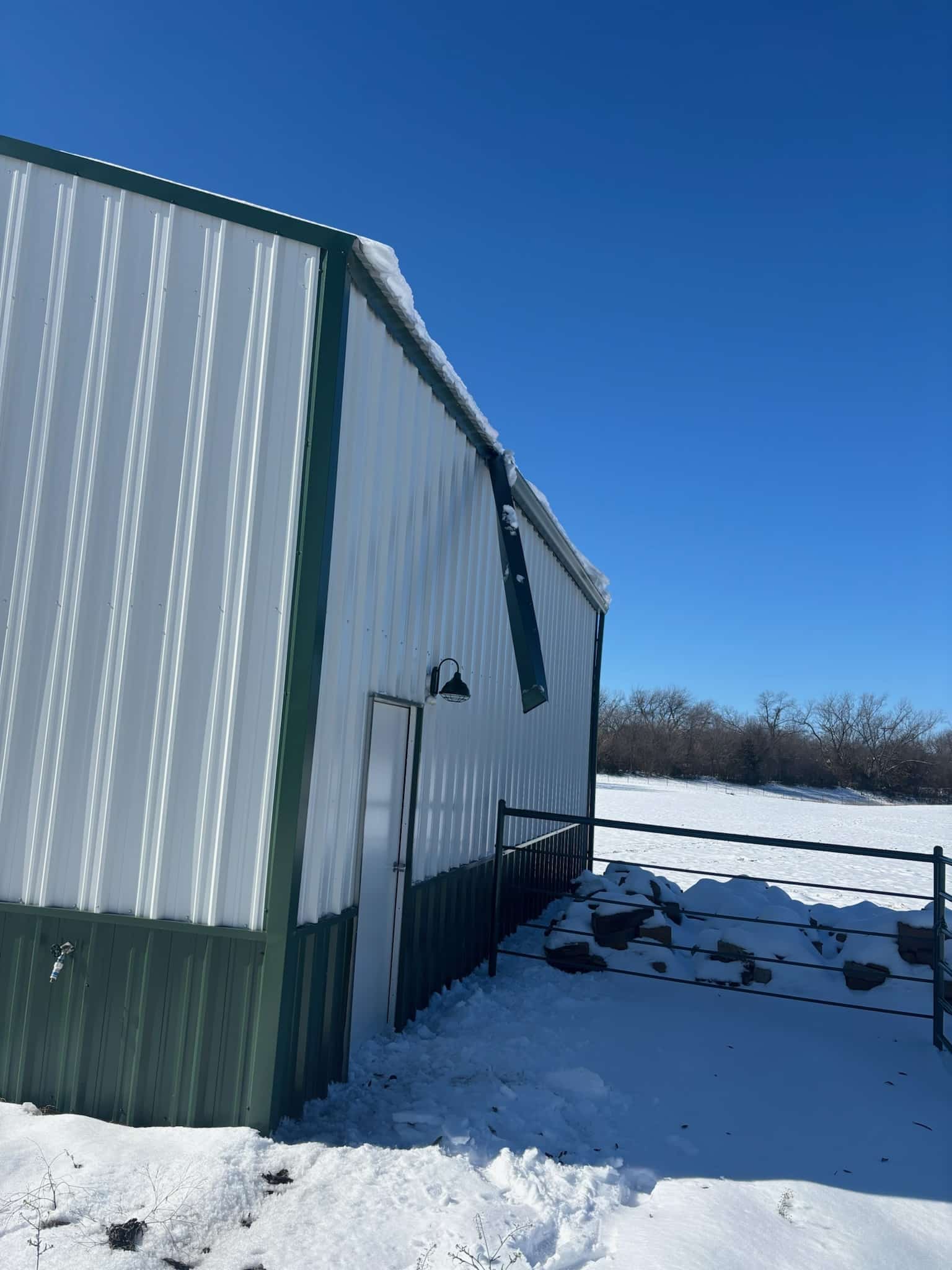
North Texas winters don’t usually bring long stretches of snow and ice — which is exactly why ice storms can be so hard on your home. When gutters aren’t designed to carry the added weight of ice, problems can develop quickly… and many of them aren’t obvious at first glance.
After a recent ice and snow event, some homeowners may already be dealing with visible gutter damage. Others may not notice an issue until the next heavy rain. Knowing what to look for now can help prevent bigger (and more expensive) problems later this spring.
We’ve previously covered why winter is the most dangerous season for your gutters in North Texas — but ice storms introduce a unique set of risks that deserve special attention.
Why Ice Is Especially Hard on Gutters
Rain and debris are expected loads for gutters. Ice is not.
During an ice storm, water freezes inside the gutter system and expands. That expansion, combined with the sheer weight of ice, puts stress on every part of the system — from fasteners and seams to downspouts and fascia boards.
In North Texas, the danger is often made worse by freeze-thaw cycles. Ice melts during the day, refreezes overnight, and repeats. Each cycle can loosen hardware and widen small separations that weren’t there before.
Gutter Problems That Often Go Unnoticed After Ice
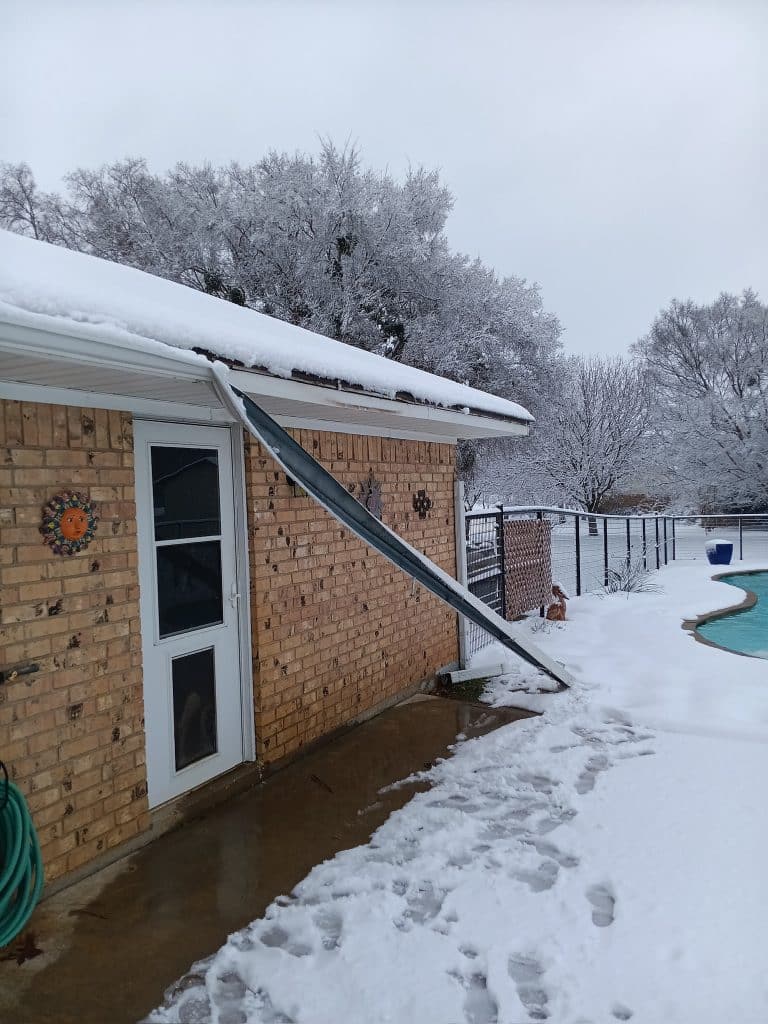
Some ice-related gutter issues are obvious. Others hide in plain sight and only show up weeks later. Here are the most common problems we see after winter storms:
1. Loose or Pulled-Away Gutters
Ice adds significant weight. Even if gutters didn’t fully detach, fasteners can loosen just enough to cause subtle sagging. This may not be noticeable from the ground — but it can affect water flow during spring rains.
2. Slight Sagging That Worsens Over Time
A gutter that looks “mostly fine” now may hold water differently than it did before the storm. Over time, standing water leads to debris buildup, rust, or overflow.
3. Separated Seams or End Caps
As ice expands, it can stress seams and joints. Small separations may not leak immediately, but they often fail during the first heavy rain.
4. Downspouts Knocked Loose
Ice sliding or falling from roof edges can strike downspouts, loosening connections at the gutter outlet or near the ground. This can redirect water too close to the foundation.
5. Ice Masking Existing Clogs
Ice can temporarily “seal” a clogged gutter. Once it melts, water suddenly has nowhere to go — leading to overflow that seems to come out of nowhere.
Ice can temporarily hide clogged gutters, which is why scheduling professional gutter cleaning after winter weather can help uncover issues before spring storms arrive.
What Homeowners Should Check After an Ice or Snow Event
You don’t need to climb a ladder to spot many post-storm issues. In fact, we strongly recommend not getting on ladders when conditions are wet or icy.
Here’s what you can safely check from the ground or around your home:
- Look along the gutter line
Are sections uneven, wavy, or pulling away from the roofline? - Check siding and fascia
Peeling paint, water stains, or dark streaks can indicate improper drainage. - Inspect downspouts at ground level
Make sure they’re still firmly attached and directing water away from the home. - Watch gutters during the next rain
Overflowing water, dripping at seams, or water spilling behind the gutter are all warning signs.
If something doesn’t look right — or if you’re unsure — that’s usually a sign it’s time for a professional inspection.
Why Ice Damage Often Shows Up During Spring Storms
One of the most frustrating things for homeowners is delayed damage.
Ice storms weaken gutter systems, but spring rains are what expose those weak points. Heavy rainfall puts pressure on fasteners, seams, and downspouts that may already be compromised.
That’s why many homeowners don’t realize there’s an issue until:
- Gutters overflow during a storm
- Water pools near the foundation
- Soil erosion appears around the home
- Fascia boards begin to rot
Catching problems now — before spring storm season — can help avoid these scenarios.
When to Call a Professional Gutter Company
It’s a good idea to schedule an inspection if you notice:
- Gutters pulling away from the roof
- Water overflowing in specific sections
- Loose or disconnected downspouts
- Signs of sagging or standing water
- Any damage following an ice or snow storm
A professional inspection can identify issues that aren’t obvious from the ground and help prevent small problems from turning into major repairs.
Loose fasteners, separated seams, or sagging sections may require gutter repair to prevent long-term water damage.
Protecting Your Gutters After a North Texas Ice Storm
Ice storms are unpredictable, but proactive maintenance goes a long way. Cleaning debris, checking fasteners, and addressing minor damage early can extend the life of your gutter system and protect your home from water damage.
If your home experienced ice or snow this winter, now is the right time to take a closer look — before spring storms arrive.
Schedule a Post-Winter Gutter Inspection
C&W Custom Gutters has helped North Texas homeowners protect their homes for over 24 years. If you’re concerned about hidden gutter damage after recent winter weather, we’re here to help with honest assessments and reliable solutions.
Call us at 940-390-3674 or fill out the form below to schedule a gutter inspection.